
The success of any project in Environmental Consulting and Engineering hinges on the quality of data moving from the field to the final report. When portable devices have replaced pre-printed forms, the process has become more organic but often more informal. This shift creates a significant challenge for small and medium-sized firms that must ensure data remains clear, usable, and legally defensible. When information is trapped in personal folders or encoded in shorthand, the entire project team suffers from a lack of visibility that can lead to liability issues and administrative delays.
There was a time when pre-printed forms provided a rigid but reliable structure for fieldwork. You knew exactly which fields needed to be filled, and that piece of paper served as the primary proof of work performed. Today, the responsibility has shifted. Firms must now organize their own digital data collection forms and ensure their databases are properly connected. For highly specialized firms with a handful of professionals, building these digital structures from scratch can feel like a task that is a little out in left field.
The transition to digital tools should, in theory, make life easier, but it often introduces new complexities. Without the "guardrails" of a physical form, data collection can become inconsistent. Different project stages require different types of data, and different niches, such as Phase I & II Environmental Site Assessments (ESA) or Industrial Hygiene (IH) & Asbestos Surveys, require varying levels of compliance and traceability. Regardless of the specific technical focus, the end goal is always the same: you need to deliver a comprehensive technical report.
Collaboration truly begins at the moment of data collection. Field technicians and professionals are not just gathering numbers; they are sharing vital insights with the rest of the team and the project manager. When this data is spread across multiple platforms, personal devices, or obscurely named folders, the job of the project manager becomes unnecessarily difficult. These information gaps are often the result of individual preferences rather than a lack of professional skill.
To maintain the integrity of a project, professionals must move away from the "isolated data pool" mentality. Relying on memory at the end of a long shift is a common pitfall. If you visit several sites in a single day and wait until the evening to document your findings, you risk forgetting crucial details. Inaccurate field notes lead to inaccurate reports, which eventually create liability for the firm. In an industry built on precision, there is no room for interpretation or "translation" of scribbles and shorthand that only one person understands.
The use of technology is meant to facilitate focus, allowing scientists and engineers to pay attention to technical details without being bogged down by administrative friction. However, technology is only as effective as the habits of the people using it. Effective fieldwork requires a commitment to transparency and future-proofing information.
First, minimize the use of acronyms and personal shorthand. What makes sense to you today might be a mystery to a colleague six months from now. Second, prioritize shared accessibility. Site pictures and documents should never be hidden in personal folders. They must be placed in a centralized location where the entire project team can access them. Finally, adopt a consistent naming convention for files. A photo named "IMG_001.jpg" is useless compared to one named "Boring_B1_Soil_Sample_030926.jpg." These small habits ensure that "no man is an island" and that the team operates as a single, cohesive unit.
In highly regulated niches such as EHS Compliance & Auditing or Wetland Mitigation Banking, data traceability is not optional. It is a legal requirement. Having a clear chain of custody and verifiable field data is what protects a firm during an audit or a legal challenge. As firms grow, the "organic" and informal ways of collecting data must be replaced by a technical project management software approach that standardizes how information is captured and stored.
A centralized system allows firms to create templates that mirror the old "pre-printed forms" but with the flexibility of digital entry. This ensures that every professional, regardless of their personal style, collects the specific data points required for that project type. It eliminates the "memory game" and ensures that the data is usable the moment it is saved.
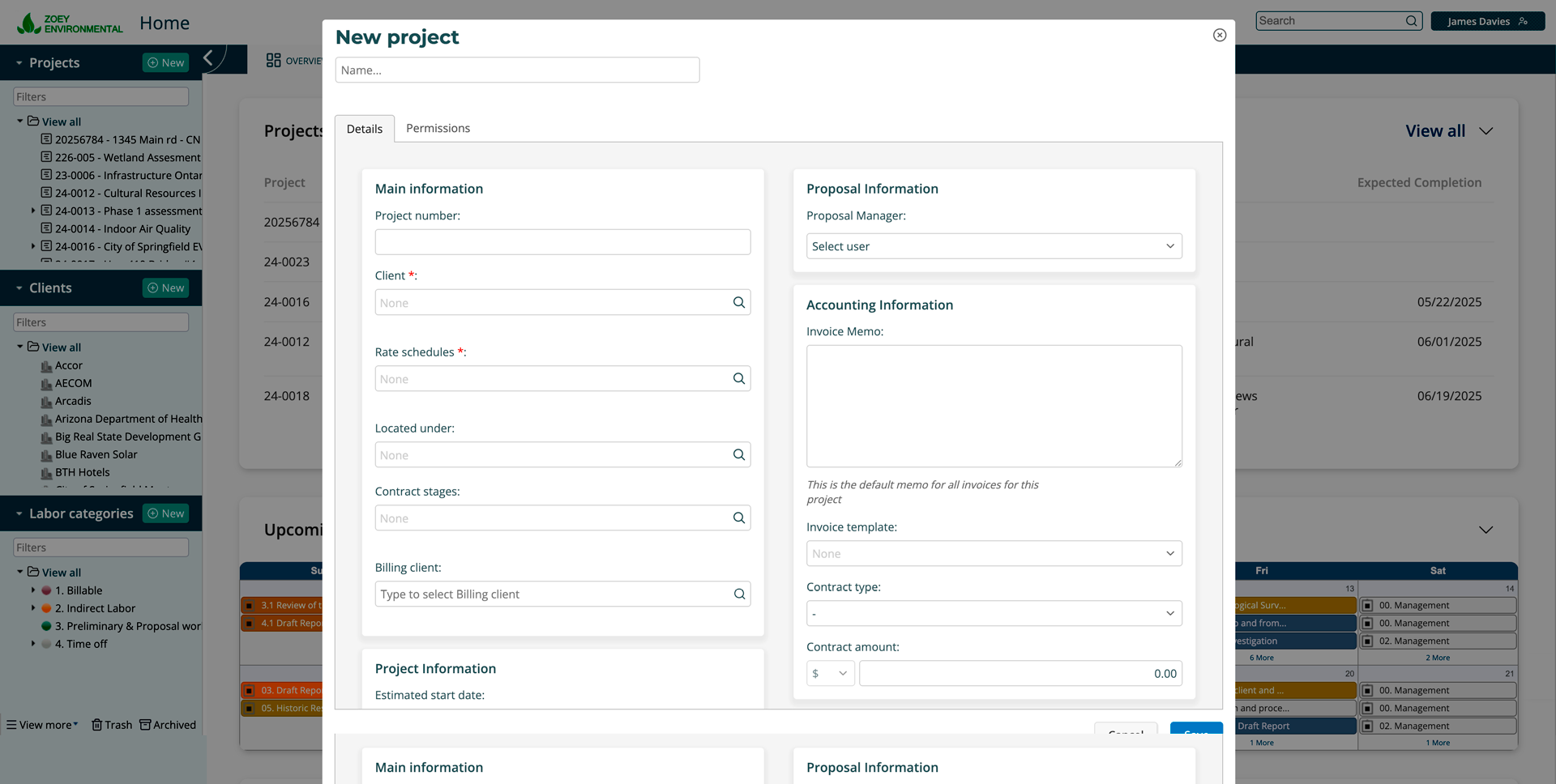
The practical solution within EVX Software is the way we use Dimensions to create a clear structure for your information. This feature automatically classifies every data point as it enters the system, preventing information from becoming stuck in fragmented locations. Instead, Dimensions anchors every document, email, and time entry to three core pillars: the project, the client, and the specific task.
This organization is most visible when your team interacts with our project forms. These forms provide a comprehensive visualization of the entire project, allowing you to see exactly where a project stands at any moment. When you personalize these forms to adapt to your specific operational needs, the underlying power of dimensions and data relationships is amplified, which directly improves the performance and speed of your team.
When using our document module, your team does more than just upload a file. They are tagging it with Dimensions that make it searchable and contextually relevant across the whole organization. This applies to:
By using EVX Software as your environmental consulting ERP, you eliminate the need for manual "translation" of field activities. Our environmental reporting tools leverage these Dimensions to pull the right data into the right place, reducing the timesheet-to-invoice lag and ensuring that your Environmental Consulting and Engineering firm operates with total clarity.
.png)
.png)