

EVX Software streamlines Remediation Project Management by integrating time, expenses, and billing into one clear workflow. No more manual spreadsheets or missed billable hours.
Invoicing is the vital rhythm that keeps an environmental firm breathing, but for many, it feels more like a monthly sprint against a pile of paperwork. In the vertical of Environmental Consulting and Engineering, the transition from fieldwork to a paid invoice is often delayed by fragmented data, late sub-consultant bills, and the constant fear of missing a billable expense. When project managers spend their valuable time digging through spreadsheets instead of solving technical challenges, the firm’s productivity and cash flow inevitably suffer.
The primary challenge with manual invoicing for environmental firms is the sheer volume of time consumed by administrative tasks. A Project Manager often acts as a data archaeologist, digging through various sources like disconnected spreadsheets, field notes, and sub-consultant invoices to piece together a single billing cycle. This process is not just slow; it is prone to human error.
In Remediation Project Management, there is a natural gap between the time work is performed in the field and the moment a sub-consultant sends their invoice. This delay often results in a significant timesheet-to-invoice lag, where the firm has already paid its own staff but hasn't yet billed the client for the third-party costs. If the project data isn't centralized, these expenses can easily be forgotten or left for the next month, creating a constant struggle with cash flow.
The financial impact is quantifiable. If a Project Manager manages five projects and spends four hours on each per month just on manual billing, they have lost 20 hours of billable time. For a firm with 50 employees, this inefficiency scales quickly. You are essentially paying for a full-time salary that produces no technical value, simply because the data is trapped in silos.
Calculating markups on sub-consultant labor is rarely a straightforward task. While the math itself is simple, the variables are not. Markups often depend on the specific type of labor, the machinery used, or the unique conditions laid out in a client’s contract. Some projects might allow a 15% markup on drilling but only 10% on laboratory analysis, while others might have a flat cap on all third-party expenses.
When these calculations are done manually, the risk of project margin erosion in consulting increases. A Project Manager might apply the wrong percentage or forget to include a specific reimbursable expense like mileage or equipment rentals. These "soft costs" are often ignored in the rush to get an invoice out the door, but over a year, they represent a significant portion of the firm's potential revenue.
In many small to medium-sized firms, access to accounting software is restricted to a few senior staff members or an outside bookkeeper. This creates an "accounting limbo" where data is highly compartmentalized. If a Field Technician doesn't submit their time entries immediately, or if a Driller is late with their bill, the person creating the invoice has no visibility into those pending costs.
This lack of integration forces staff into a "memory game." A Technician making three site visits a day will struggle to remember the exact hours and mileage for each task by the end of the week. When billing relies on memory rather than real-time data collection, hours are lost, and the accuracy of the project’s financial health is compromised.
To cope with the lack of proper tools, many firms resort to "tricks" that often cause more harm than good. One common tactic is "pre-billing," where the firm invoices for a predicted number of hours before the field team has even logged their time. This is a gamble that often leads to messy reconciliations and credits in the following month, which further complicates the paper trail.
Other firms try to simplify things by applying a universal markup across all sub-consultants, ignoring the specific contract terms. While this saves time in the short term, it can lead to under-billing or, worse, violating a client's contract and damaging the professional relationship. Some firms add a flat "admin fee" to invoices to cover these headaches, but if the actual administrative costs for a complex remediation phase spike, that flat fee won't protect the project's margin.
The most effective way to break this cycle is to move away from disconnected tools and adopt a system that integrates time, expenses, and billing. When field data and sub-consultant costs are tracked in the same place where the invoice is generated, the administrative burden evaporates.
By using technical project management software, firms can ensure that every hour logged in the field and every sub-consultant invoice received is immediately visible to the Project Manager. This transparency allows for real-time monitoring of the budget and ensures that markups are applied automatically based on the specific rules of the project.
Managing the complexities of environmental projects requires more than just a spreadsheet; it requires a specialized Environmental consulting ERP. EVX Software provides a Specific Solution to these industry pain points by consolidating the entire project lifecycle into one platform.
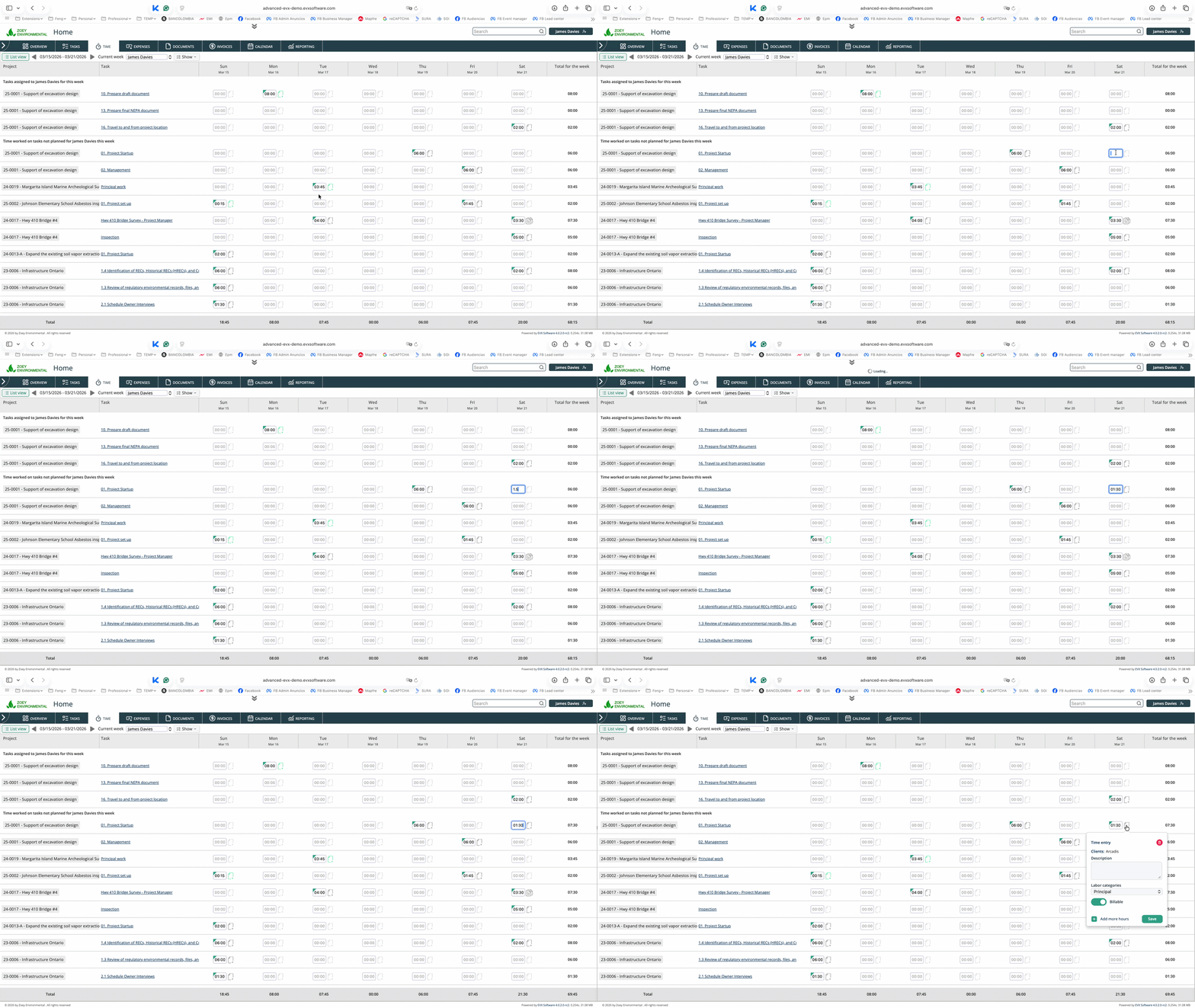
With EVX Software, the "timesheet-to-invoice lag" is eliminated. Time entries and expenses are linked directly to the project, allowing Project Managers to generate accurate invoices with a few clicks. The system is built to manage multiple price lists with different rates efficiently, giving firms the flexibility to implement differentiated billing categories and specific product types.
This capability drastically reduces financial losses by allowing Project Managers to create differentiated margins and price lists based on whatever criteria the project demands, whether it is by type of labor, machinery, or client-specific contract terms. EVX Software ensures that no "soft costs" like mileage or equipment are left off the bill, allowing your team to stop playing the memory game and start focusing on the technical work that truly grows your firm.
.png)

.png)

