Effective management in Environmental Consulting and Engineering requires a delicate balance between technical precision and administrative efficiency. Industrial hygiene projects are uniquely challenging because they rely on highly specialized field data, strict laboratory timelines, and a mobile workforce that is often disconnected from the home office. When field data collection silos exist, the firm suffers from a significant timesheet-to-invoice lag that directly impacts cash flow and profitability. By shifting toward an integrated approach to project management, firms can eliminate the administrative debt that accumulates during complex site assessments. This transition allows project managers to gain real-time visibility into labor costs and equipment usage, ensuring that every billable minute is captured and every technical report is delivered on schedule.
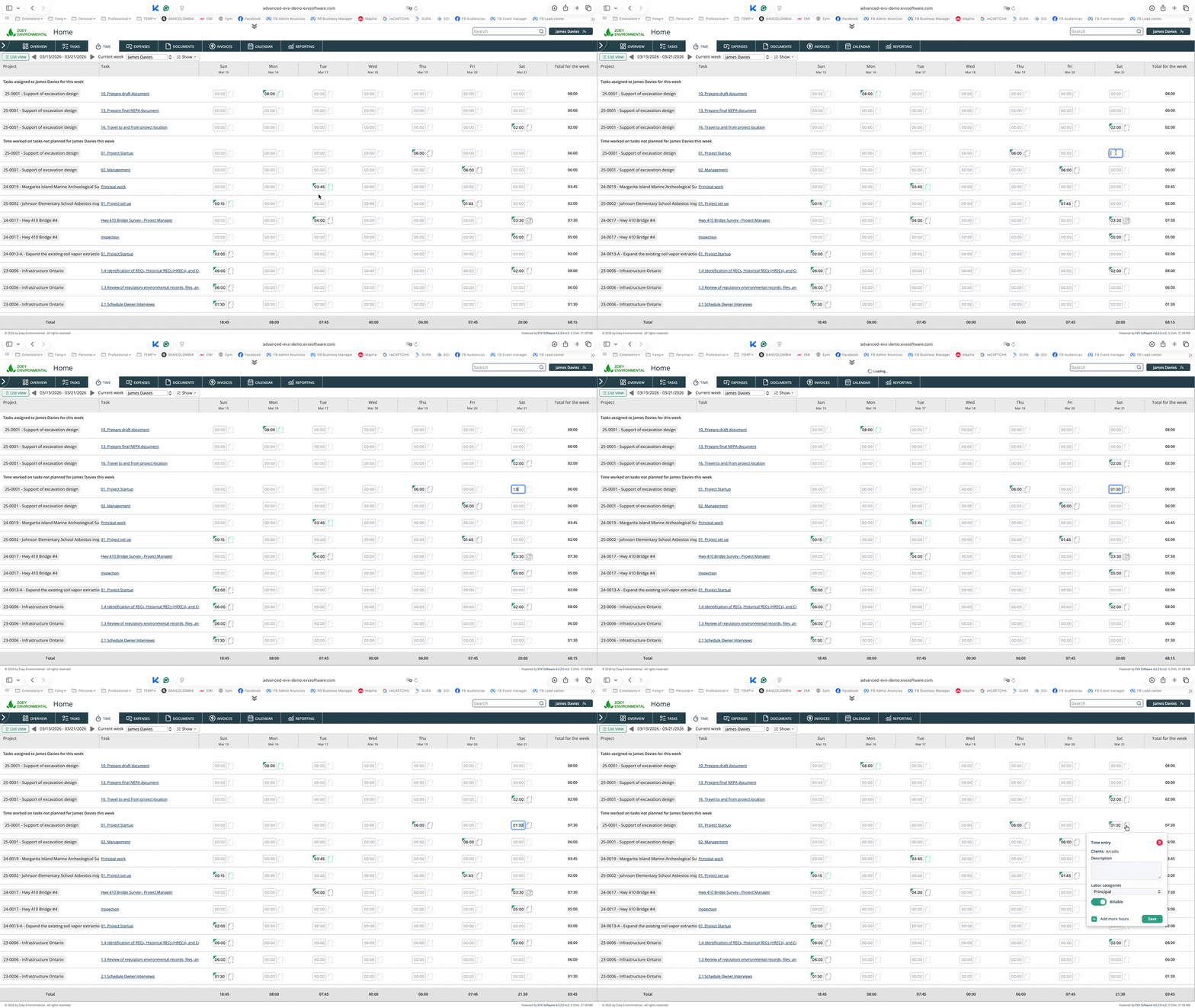
Industrial hygiene and asbestos surveys are labor-intensive processes that generate high volumes of data. A technician in the field is often managing multiple air sampling pumps, noise dosimeters, and physical sample bags, all while documenting site conditions. In many firms, this information is captured on paper logs or disparate digital files. This separation of technical data from project accounting creates a massive bottleneck. When time tracking is treated as an afterthought, it is common for staff to wait until the end of the week to reconstruct their activities. This leads to project margin erosion in consulting because small tasks, such as equipment calibration, travel time, or client phone calls, are frequently forgotten and never billed.
Furthermore, the lack of real-time visibility into field progress makes it difficult for project managers to identify when a project is going over budget. If a technician encounters unexpected site conditions that require additional sampling, those hours are often absorbed as a loss unless there is a system in place to flag the overage immediately. Manual invoicing for environmental firms becomes a multi-day ordeal of chasing down timesheets, verifying lab invoices, and cross-referencing field notes against the original project quote.
One of the most complex aspects of project management in this field is the variety of costs associated with a single site visit. Industrial hygiene projects rarely involve a single billing rate. A typical project might include a field technician for sampling, a senior industrial hygienist for data review, and a certified industrial hygienist (CIH) for final report sign-off. Manually calculating these different rates across various project phases is prone to error and consumes valuable administrative time.
Beyond labor, these projects involve high third-party costs. Laboratory fees for asbestos, lead, or chemical analysis must be tracked and marked up according to the contract. Without integrated project accounting for engineers, sub-consultant markup management often fails. It is surprisingly common for firms to pay a laboratory invoice but fail to include that expense on the client’s final bill, or to apply the wrong markup percentage. These small oversights, when multiplied across dozens of projects, represent a significant loss of potential revenue and weaken the financial health of the firm.
The final deliverable for any industrial hygiene project is the technical report. This document must be accurate, as it often serves as a legal record of EHS compliance and auditing. However, the process of drafting these reports is often the most delayed stage of the project. Consultants frequently find themselves stuck in "reporting silos," where they must manually transfer data from field notes and laboratory certificates into a formatted report. This redundancy not only slows down the delivery to the client but also increases the risk of data entry errors.
To remain competitive, firms must find ways to automate the transition from field work to final reporting. When the project structure is defined clearly from the beginning, with tasks linked to specific goals like Phase I & II Environmental Site Assessments (ESA) or groundwater sampling, the data flows more naturally through the organization. This allows the technical staff to focus on interpreting results and providing safety recommendations rather than formatting tables and chasing missing information.
The solution to these administrative hurdles is found in the specialized tools provided by EVX Software. As an environmental consulting ERP, our platform is designed to handle the specific workflows of firms performing industrial hygiene and engineering tasks. By centralizing all project information, EVX Software eliminates the need for multiple disconnected systems and provides a single source of truth for both the field team and the accounting department.
EVX Software provides immediate insight into project health through the Project Labor Usage Summary. This report allows project managers to see exactly how much labor has been expended compared to the original budget. For projects being quoted, the Project labor budget - per labor category ensures that the proposal is based on accurate historical data, reducing the risk of under-bidding. By using the Worked time by person report, firms can identify which team members are operating efficiently and which projects are suffering from "admin bloat."
The platform simplifies the entire financial lifecycle of a project. With integrated project accounting for engineers, the system automatically handles multiple billing rates per project and manages sub-consultant markup management without manual intervention. This ensures that every laboratory fee and equipment rental is captured and billed with the correct markup. To improve cash flow, the Aging unbilled report and Work in progress (WIP) summary by project give managers a clear view of what is ready to be invoiced, significantly reducing the timesheet-to-invoice lag.
Beyond daily operations, EVX Software provides powerful project performance BI through its extensive reporting module. The Sales Margin report allows owners to see the true profitability of different service types, such as mold inspections versus asbestos surveys, helping the firm decide where to focus its growth. With the Cost and revenue forecast, leadership can look ahead to ensure the pipeline is healthy and that resources are allocated correctly across the team.
EVX Software simplifies the complex administrative requirements of environmental firms, allowing your team to spend less time on paperwork and more time on the science of protecting the environment. Our platform adapts to your firm's unique workflows, providing the clarity and control needed to increase productivity and revenue in a competitive market.
.png)
.png)