
Stop building the same project from scratch. Learn how project templates in EVX Software help environmental and engineering firms reduce setup time, avoid critical mistakes, and start projects with all the right parts in place.
If your team handles site assessments, remediation, environmental monitoring or any other type of project regularly, you know the drill: same process, same deliverables, same tasks. Yet somehow, every new project still starts with a blank page, or worse, someone’s memory.
Project templates in EVX Software were built with this in mind. They allow Environmental Consulting and Engineering firms to start with structure, not from scratch. In this article, we’ll walk through what templates are, how they support environmental work, and how they help you avoid common pitfalls that show up in repetitive projects.
Templates are pre-defined frameworks that contain repeatable elements used across projects—things like tasks, budgets, rate schedules, or roles. In environmental and engineering firms, the work is often structured: you know what needs to be done, who’s doing it, and roughly how much it’ll cost.
Rather than rebuilding that each time, templates allow teams to carry forward what already works. This consistency keeps your data clean, reduces missteps, and saves project managers from the tedium of re-entry.
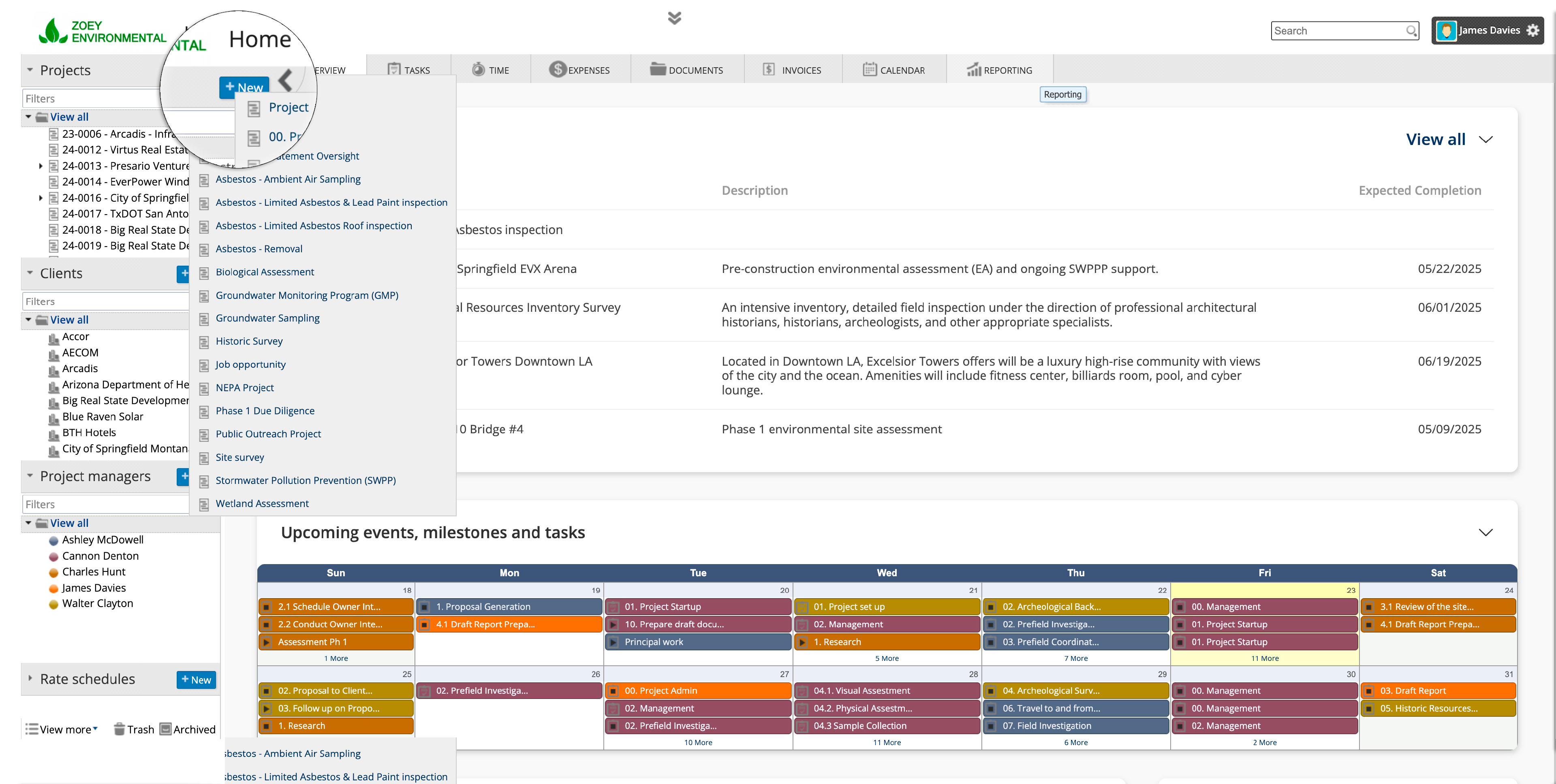
EVX Software allows you to create project templates with a wide set of predefined properties:
When you generate a project from a template, all of this is instantly available. No second-guessing, no digging through past projects to “remember how you did it last time.”
Even the most seasoned teams fall into a few predictable traps when setting up similar projects manually:
Forgetting a required report or fieldwork step is easy when relying on memory or past files.
Applying the wrong rate schedule or forgetting to update it can lead to revenue issues or client disputes.
When budgeted expenses aren’t included from the start, cost tracking becomes reactive instead of proactive.

By building these elements into a project template, you remove the guesswork.
Templates shift the effort from every time to just once—you create the framework once, then apply it consistently.

For Environmental Consulting and Engineering firms that handle recurring project types, templates are more than a convenience—they’re a safeguard. With EVX Software, you can reduce setup time, improve accuracy, and give your team more time to focus on execution.
.png)
.png)
.png)
.png)
